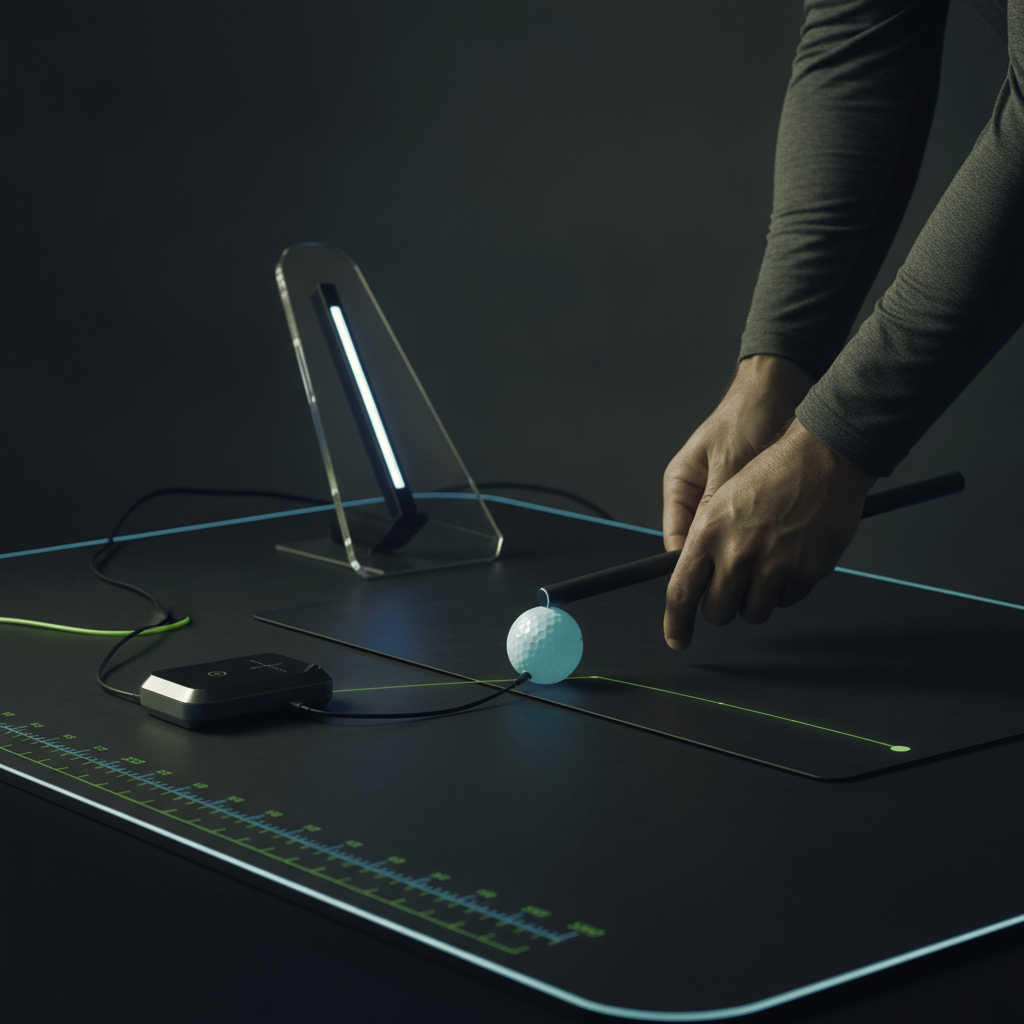
Every amateur who wants distance reaches for the same lever: swing harder. It almost never works, because effort and clubhead speed are not the same variable.
Speed at impact is the product of sequence — hips, then torso, then arms, then club — releasing in the right order at the right time. When you swing harder, you tend to fire everything at once. The club arrives early, the shaft never fully loads, and the ball speed you were chasing leaks out the top of the swing.
Tempo is the container. Speed is what you pour into it.
This is why a 3:1 ratio — three units of time back for every one unit down — shows up in nearly every tour swing regardless of how fast the player looks. The pros are not slow. They are ordered. The ratio holds whether the swing takes 0.9 seconds or 1.2.
The practical fix is boring and it works: train tempo first with a flexible-shaft trainer, then add speed on top of it with an overspeed protocol. The trainer teaches the club to lag and release in sequence; the speed sticks raise the ceiling that sequence pours into. Reverse the order and you just get faster at swinging out of sync.
Measure it. Put a metronome on 3:1, make ten swings, and watch where your transition falls. If you are ahead of the beat coming down, that is your distance leak — not your gym number.